Why Angiogenesis Matters After Burns
Angiogenesis, the growth of new blood vessels from existing vasculature, is essential to supply oxygen and nutrients to the wound for all subsequent healing phases. After a severe burn, most vessels supplying the wound area are destroyed or occluded by thermal damage, creating a hypoxic wound core where HIF-1alpha stabilisation drives VEGF expression and initiates the angiogenic response (Wei et al., Front Physiol, 2023).
The key cell type in vascular regrowth is the Endothelial Cell, which proliferates, migrates along cytokine gradients (principally VEGF and FGF-2), and forms new capillary networks through a process of sprouting, branching, and anastomosis. This model focuses on how varying the initial endothelial cell count changes inflammatory dynamics across the wound space.
The Simulation
The videos below show how varying the initial endothelial cell count changes cytokine concentrations and inflammation across the wound patch over the first 4 days (~100 hours) post-injury.
What to Look For
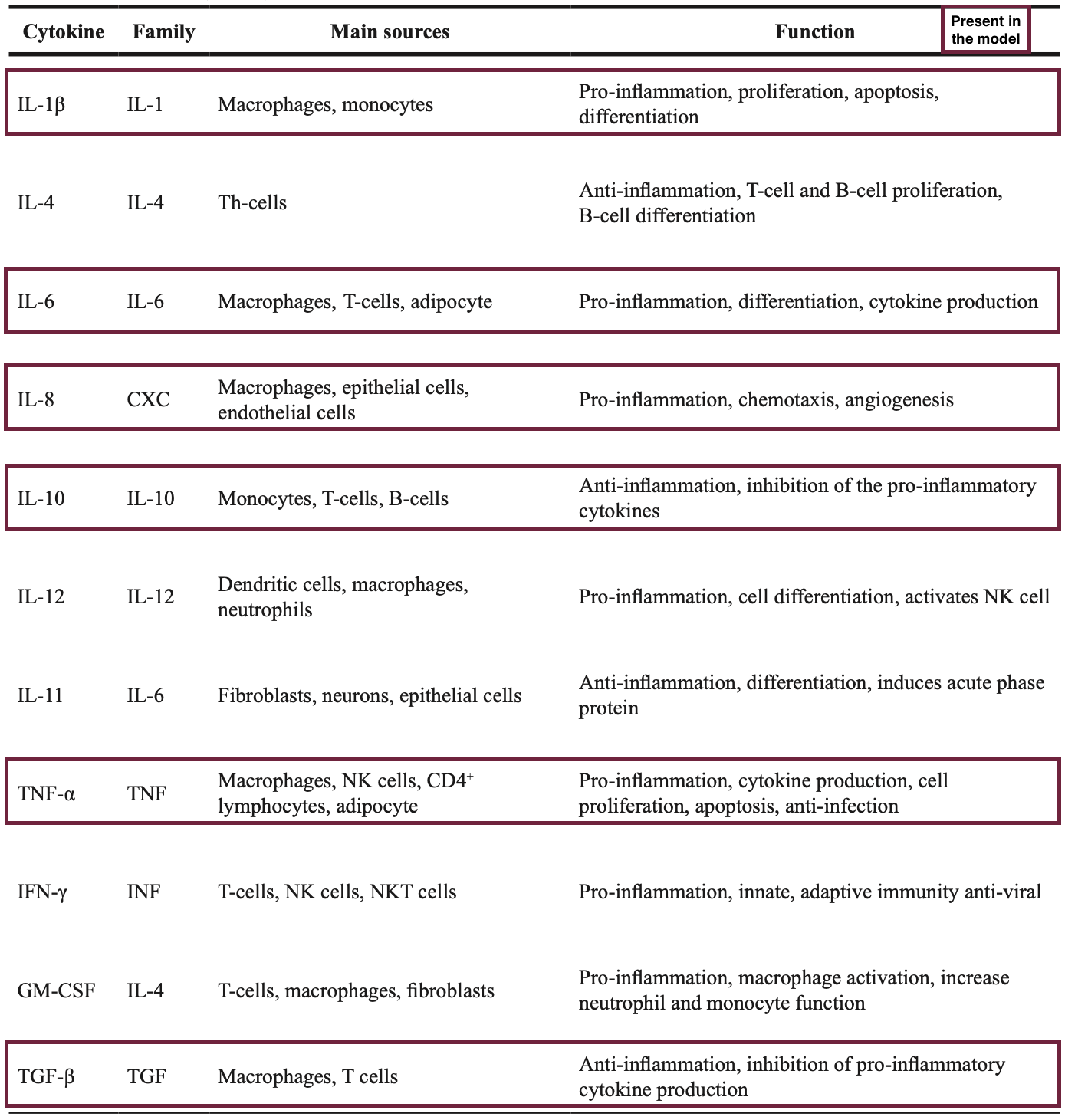
Watch the cytokine field first. Cytokines are signalling proteins that attract cells to where they are needed. Different cytokines serve different roles in wound resolution. The table below summarises key cytokines modeled in this simulation.
Model Parameters and Assumptions
The simulation varies a single parameter across runs: the initial endothelial cell count (denoted Ex in the videos, or Sx in the paper). All other parameters (Lambda and the Saturation coefficient) remain constant across simulations.
Model Variables and Interactions

Key Assumptions
- The wound patch is divided into an outer ring of 9 cm² (surrounding the wound) containing cells and cytokines from the systemic circulation via remaining blood vessels, and an inner square of 16 cm² representing the burn wound itself.
- The simulation starts immediately after burn injury and runs to day 4 post-injury (approximately 100 hours).
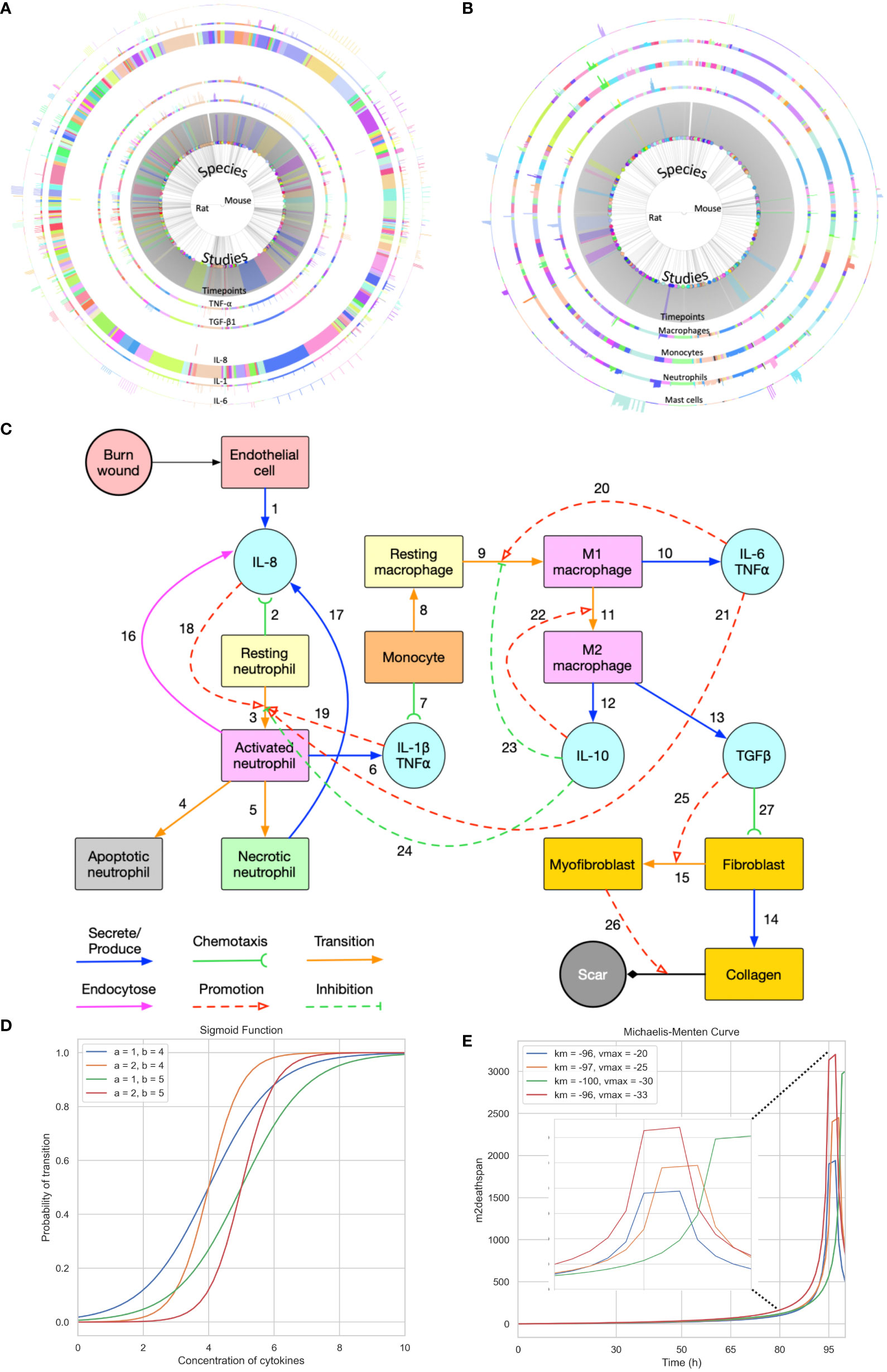
- Cells and cytokines follow the biological interaction rules described in the MAP4b diagram. View Figure C (interaction diagram) →